
This post may contain affiliate links, which means we may receive a small commission when you make a purchase at NO additional cost to you. Thank you for supporting our site in this way!
There’s a moment in my conversation with DOE when we start talking about genre and genre-bending songs, and the way she describes it immediately makes sense.
Music, she says, is a kind of sonic language.
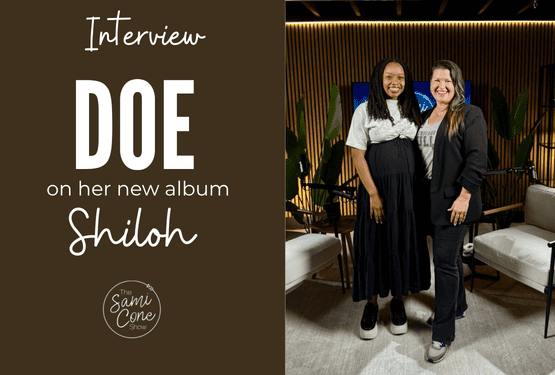
DOE Shiloh Album Interview
We all grow up hearing different sounds. Some people were raised on Gospel quartets. Some on contemporary Christian music. Some on hymns, worship bands, R&B, choir music or whatever happened to be playing in the car with their parents. Those sounds become familiar long before we have words to explain why.
That idea is woven throughout DOE’s new album, Shiloh, which was released August 28 through Provident Entertainment and Sony Music.
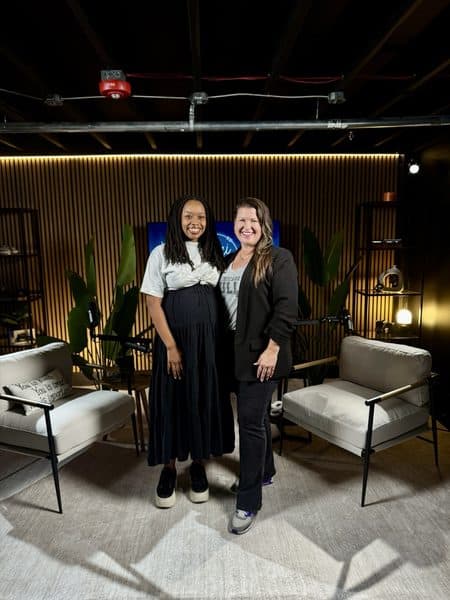
DOE has never fit neatly into one musical box, and she doesn’t seem particularly interested in trying. Her background includes traditional Gospel, contemporary Christian music, worship and R&B, and those influences sit comfortably next to one another on Shiloh. She told me she grew up hearing artists as varied as The Clark Sisters, Israel Houghton, Andraé Crouch, Ron Kenoly, Hillsong and Planetshakers.
Instead of choosing between those sounds, she wanted to make room for them. That may be one of the reasons Shiloh feels so personal.
The title comes from the name of DOE’s son, but its meaning reaches beyond him. Shiloh means peace, and the album grew out of DOE thinking about God’s presence, legacy and what it means to pass faith from one generation to the next.
Psalm 22 became especially important during the making of the record. DOE was drawn to the word “posterity” and the realization that every generation is the result of someone before them making sure faith was remembered and carried forward.
That idea becomes almost tangible throughout the album.
DOE grew up making music with her family as part of the GRAMMY-nominated group forever JONES, so family and faith have never been separate lanes in her story. On Shiloh, members of her family sing background vocals, and her mother, Pastor Kim Jones, joins her on “Mighty Long Way.”
When we talked about that collaboration, I kept thinking about how different it must feel to sing with your mother after becoming a mother yourself. There is a particular weight to receiving something from the generation before you and then suddenly realizing you are the generation responsible for passing it on. That tension between receiving and giving, remembering and creating something new runs through Shiloh.
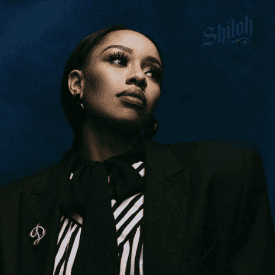
The record includes the songs:
- “Know Your Name”
- “Every Second”
- “I’ll See It”
- “Mighty Long Way”
- “He Is King” featuring Lizzie Morgan
- “To You” featuring Joe L Barnes
- “High Praise”
- “You Will Have It All”
- “On God”
- “Washed”
- and the title track featuring Israel Houghton.
But DOE was not simply trying to make a collection of worship songs. She wanted the album to feel like worship happening in a room.
Even though Shiloh was recorded in a studio, the team worked to recreate the experience DOE remembers from growing up in church: the sound of people worshipping together, the choir, the pews, even the sensory memory of the room itself.
That matters because congregational worship is different from simply listening to a song. There is something about standing beside other people and singing the same words that changes the experience. You hear your own voice, but you also hear yourself becoming part of something larger.
That may be what DOE means when she talks about sonic language. A certain melody or rhythm can reach someone before the lyric does. You hear it and recognize it. Somewhere inside you, something says, I know this. I speak this language.
That conversation about music eventually turned into a conversation about life, fear and the things we are still learning even after we have achieved some of the things we once prayed for.
DOE is already a GRAMMY Award winner and an eight-time GRAMMY nominee. Her sophomore album, Heart of a Human, won Best Contemporary Christian Music Album. She has three GMA Dove Awards, more than 172 million career streams, and collaborations with artists including Jon Batiste, Lecrae, Maverick City Music and Tauren Wells.
She recently joined Jon Batiste on “Black Boy” and performed at Carnegie Hall. Those accomplishments sound impressive on paper, and they are. But as she told the students in the audience, a Grammy Award does not mean an easier road and success does not mean fear disappears.
We even discussed how to overcome the fear and anxiety that can creep in, especially before stepping on stage. She said, “I still feel that wall of fear, but it’s paper thin.”
DOE also talked about the value of wrestling with things instead of immediately trying to escape them. “We need to wrestle because that’s how you get better,” she told me. We even referenced traits of Dolly Parton, who we recently lost on August 25, 2026.
This is an album rooted in what DOE inherited while still asking what she wants to hand to the next generation. It honors the sounds that raised her without simply recreating them. It makes room for Gospel, worship, contemporary Christian music and R&B because DOE understands something music lovers have always known: genres may give us categories, but music has never been very interested in staying inside them.
The best music gives us a language for things we already feel but have not yet figured out how to say. And sometimes, if we are lucky, it gives us words to carry with us into the next generation.
Watch my full interview with DOE here:
DOE’s new album, Shiloh, is available now. Listen to Shiloh on Amazon.
Catch up on past episodes of The Sami Cone Show.
